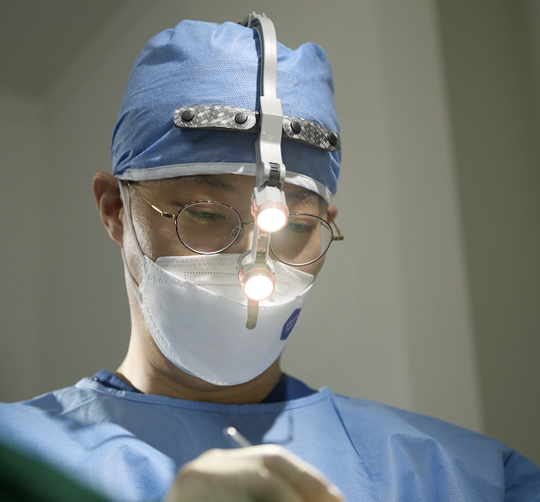
Eye surgery · Seomyeon, Busan

Ptosis Correction in Busan, Korea

Brighter, more open, more even eyes — by strengthening the muscle that lifts your eyelid, not by simply removing skin. Planned and performed by board-certified plastic surgeons at T&T Plastic Surgery, Seomyeon.

02 Board-certified plastic surgeons KSAPS Full members EN English-friendly support 7–10 Typical days in Busan

What is ptosis correction?

Ptosis correction is eyelid surgery that raises a drooping upper eyelid by tightening or repositioning the levator muscle — the muscle that opens the eye. At T&T Plastic Surgery in Seomyeon, Busan, surgeons choose an incisional or non-incisional method based on muscle strength, so eyes look more open, alert and symmetrical without looking “done”.

Methods
Incisional · Non-incisional
Daily activities
Most resume in 2–4 weeks
Final result
Settles over 1–3 months
Stay in Busan
Around 7–10 days

Key takeaways

  • Ptosis is a weak eye-opening muscle — removing skin alone will not fix it.
  • Mild ptosis may suit a non-incisional method; moderate to severe ptosis usually needs an incisional approach.
  • It is often combined with double eyelid surgery for a defined, balanced crease.
  • Your surgeon measures muscle function in person before confirming the plan.
Is it right for you?

Signs you may be a good candidate

A droopy lid that covers part of the pupil is often mild ptosis rather than excess skin. Your surgeon evaluates muscle function, skin, brow position and facial balance before recommending anything.

  • Upper eyelids cover part of the eye or pupil
  • Eyes look tired or sleepy even when you are rested
  • One eye opens less than the other
  • You raise your eyebrows or forehead to open your eyes
  • Eye opening feels weak or effortful by the end of the day
  • A previous double eyelid surgery still looks heavy

Ptosis or double eyelid surgery?

If the crease is fine but the lid sits low over the pupil, the issue is usually the muscle — that is ptosis. If the lid opens well but has no crease or extra skin, double eyelid or upper blepharoplasty may be enough. Many patients need both.

Read the guide: Ptosis or double eyelid? →

Signs you may have mild ptosis →

Techniques

Two methods, one goal

The right technique depends on how much the lid droops, how strong the levator muscle is, and the result you want.

01

Incisional ptosis correction

A small incision in the natural crease lets the surgeon adjust the lifting muscle and surrounding tissue directly.

  • Precise, customised muscle adjustment
  • Suits moderate to severe ptosis
  • Can be combined with double eyelid surgery
  • Best for complex anatomy or revisions
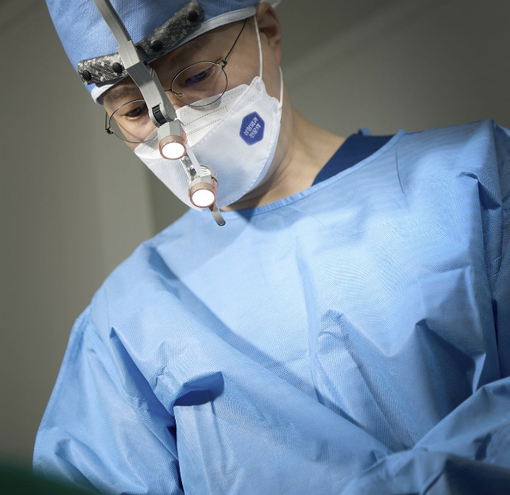
02

Non-incisional ptosis correction

The eyelid lift is improved through tiny openings, without a full incision.

  • Minimal visible scarring
  • Less swelling
  • Faster recovery
  • Suits mild ptosis
Comparison for guidance only — your surgeon confirms the method after examining your eyelid function.
Factor Incisional Non-incisional
Degree of ptosis Moderate to severe Mild
Scar Hidden in the eyelid crease Minimal, often not visible
Swelling More in the first weeks Less
Customisation Highest — direct muscle adjustment Limited to milder corrections
Combine with double eyelid Yes Yes, in suitable cases
Benefits

Function and appearance

The aim is not bigger eyes — it is comfortable eyelid movement and a natural shape that suits your face.

i.

Brighter, more open eyes

Lifting the lid reveals more of the iris, so you look awake and refreshed.

ii.

Better symmetry

Uneven eyelid heights are balanced for a calmer, more even expression.

iii.

Less forehead strain

You no longer need to raise your brows to see clearly, which can ease forehead tension.

For international patients

Your ptosis journey to Busan

English-friendly coordinators guide you from first photo to flight home, with a clear quote before you book travel.

  1. 01

    Online assessment

    Send photos via WhatsApp or the form. Your surgeon suggests a method.

  2. 02

    Quote & dates

    Receive a cost estimate and plan your surgery date around your trip.

  3. 03

    In-person consult

    Muscle function is measured and the final design agreed with you.

  4. 04

    Surgery & follow-up

    Check-ups and stitch removal at the clinic in Seomyeon.

  5. 05

    Fly home

    Leave with an aftercare plan and online follow-up.

7–10 days Recommended stay in Busan for follow-ups and early recovery
Seomyeon Central Busan — hotels, pharmacies and transport nearby
EN support English-friendly coordinators and WhatsApp messaging
Recovery

What to expect, week by week

Healing varies by method and person. Following aftercare instructions and attending follow-ups helps results settle predictably.

First week

Swelling peaks

  • Swelling and bruising are expected
  • Mild tightness around the eyelids
  • Cold compresses help reduce swelling
Weeks 2–4

Back to routine

  • Swelling gradually decreases
  • Eyelid position looks more natural
  • Most daily activities can resume
Months 1–3

Result settles

  • Eyelid movement becomes smoother
  • Eye shape continues to refine
  • Final result becomes clear

More: Ptosis surgery recovery timeline · Flying after eye surgery

Your surgeons

You meet your surgeon, not a salesperson

Both directors are board-certified plastic surgeons and members of Korea’s leading aesthetic and eye plastic surgery societies.

Dr. Tae Ho Kim, board-certified plastic surgeon at T&T Plastic Surgery Busan
Chief Director · Board-certified

Dr. Tae Ho Kim

  • Former plastic surgeon, Newline & The Face Plastic Surgery
  • Lifetime member, Korean Society of Plastic & Reconstructive Surgeons (KSPRS)
  • Full member, Korean Society for Aesthetic Plastic Surgery (KSAPS)
  • Full member, Eye Plastic Surgery Research Society
Meet Dr. Tae Ho Kim →
Dr. Geun Tae Kim, board-certified plastic surgeon at T&T Plastic Surgery Busan
Chief Director · Board-certified

Dr. Geun Tae Kim

  • Former director, Liting, Haneul & The Face Plastic Surgery
  • Lifetime member, KSPRS
  • Full member, KSAPS
  • Full member, Korean Cleft Palate–Craniofacial Association
About T&T Plastic Surgery →

Honest advice

No unnecessary procedures — and published price guides.

Muscle-first design

Levator function is measured before any plan is confirmed.

Natural results

Balanced opening that keeps your own eye character.

Structured aftercare

Scheduled check-ups in Busan and online follow-up at home.

Transparent pricing

Know the cost before you fly

Price depends on the method, both eyes vs one, and whether ptosis correction is combined with double eyelid surgery. Your final quote is confirmed after your surgeon’s assessment.

  • Free remote photo assessment
  • Written quote in English
  • Follow-up visits planned around your stay
  • Ask about VAT refund for foreign patients
Frequently asked

Ptosis correction questions

Have a question about your own eyes? Send a photo on WhatsApp — a coordinator replies with your surgeon’s guidance.

Ask on WhatsApp →
Is ptosis correction the same as ptosis surgery?
Yes. Both terms describe surgery that improves a drooping upper eyelid by correcting the eyelid-lifting muscle. Clinics simply use different names.
Will ptosis correction make my eyes look too big?
No. The goal is natural eyelid opening and better facial balance, not oversized eyes. The lid height is planned to suit your face.
How long should international patients stay in Busan?
Most international patients stay around 7–10 days, which allows time for follow-up appointments and early recovery before flying home. See how many days to stay in Busan.
Can ptosis correction be combined with other eye procedures?
Yes. Depending on your anatomy it is often combined with double eyelid surgery, epicanthoplasty or lateral canthoplasty.
Incisional or non-incisional — which do I need?
Mild ptosis with good muscle function may suit a non-incisional method. Moderate to severe ptosis, complex anatomy or revision cases usually need the incisional method. Your surgeon decides after measuring muscle strength.
Can ptosis come back after surgery?
Results are designed to be long-lasting, but healing and anatomy vary. Read can ptosis return after surgery? and ask your surgeon how your case is planned.
Private consultation

Ready for brighter, more open eyes?

Share your photos and goals. Your surgeon will suggest only what you need — with a clear quote before you travel.

↓ Free quote form